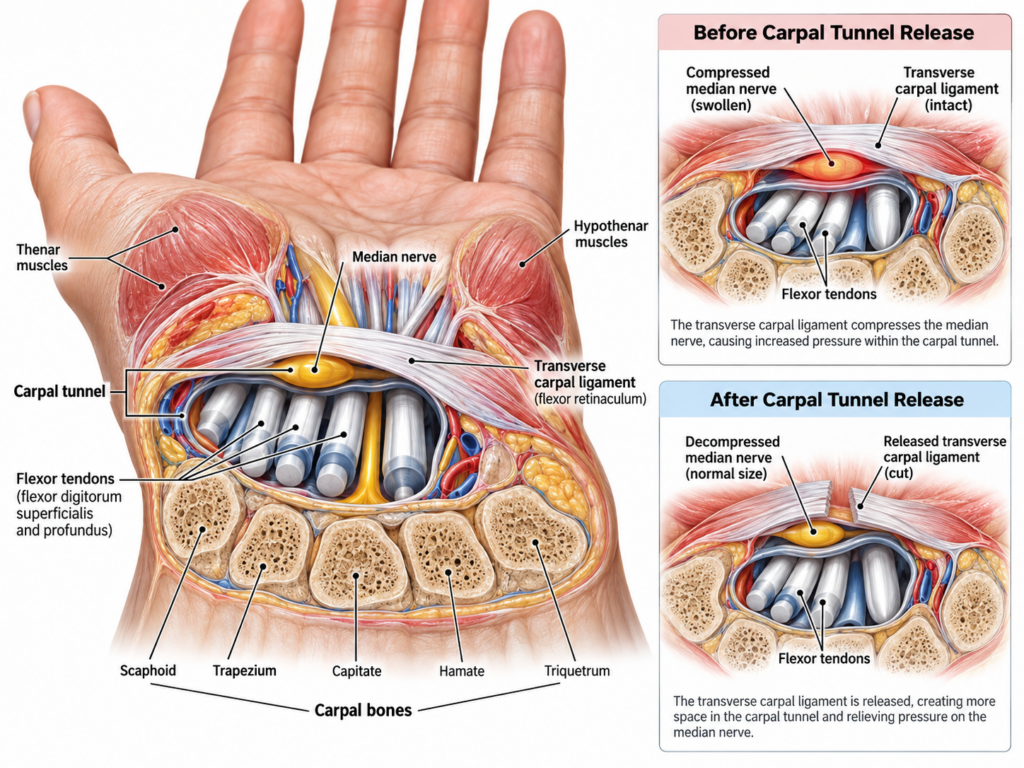
Carpal Tunnel Surgery
Relief for Numbness, Tingling, and Hand Weakness
Carpal tunnel syndrome occurs when the median nerve becomes compressed as it passes through a narrow space in the wrist called the carpal tunnel.
This pressure on the nerve can cause numbness, tingling, burning, pain, and weakness in the hand. Symptoms often begin gradually and may become more noticeable at night or with repetitive hand use.
When symptoms become persistent or nerve compression becomes more severe, carpal tunnel release surgery may be considered.
Common Symptoms of Carpal Tunnel Syndrome
Symptoms may include:
- Numbness or tingling in the thumb, index, middle, and part of the ring finger
- Burning or aching in the hand
- Symptoms that wake you at night
- Hand weakness
- Difficulty gripping or holding objects
- Dropping objects
- A feeling that the hand is swollen even when it is not
- Symptoms that travel into the wrist or forearm
As the condition progresses, some patients may notice increasing weakness or loss of muscle strength at the base of the thumb.
What Causes Carpal Tunnel Syndrome?
Carpal tunnel syndrome develops when pressure increases around the median nerve in the wrist.
Factors that may contribute include:
- Repetitive hand or wrist activity
- Wrist anatomy
- Swelling or inflammation
- Previous wrist injury
- Arthritis
- Certain medical conditions
- Pregnancy-related swelling
- Prolonged wrist positioning
In many patients, more than one factor may contribute to the nerve compression.
How Is Carpal Tunnel Syndrome Diagnosed?
Evaluation typically includes a discussion of symptoms and a physical examination of the hand and wrist.
Your physician may assess:
- Sensation in the fingers
- Grip and hand strength
- Thumb muscle strength
- Symptoms produced by certain wrist positions
- Signs of median nerve irritation
In some cases, nerve conduction studies or EMG testing may be used to evaluate the severity of nerve compression.
Nonsurgical Treatment Options
Mild or early carpal tunnel syndrome may improve with conservative treatment.
Options may include:
- Wrist splinting, especially at night
- Activity modification
- Anti-inflammatory medications
- Corticosteroid injection
- Hand or occupational therapy
- Changes in repetitive activities or wrist positioning
The goal is to reduce pressure on the median nerve and improve symptoms.
When Is Surgery Considered?
Carpal tunnel release surgery may be recommended when:
- Symptoms continue despite nonsurgical treatment
- Numbness becomes persistent
- Hand weakness develops
- Testing shows significant nerve compression
- Symptoms interfere with sleep, work, or daily activities
- There is concern for progressive nerve damage
Waiting too long in severe cases may increase the risk of permanent nerve or muscle damage.
What Is Carpal Tunnel Release Surgery?
Carpal tunnel release surgery is performed to reduce pressure on the median nerve.
During the procedure, the transverse carpal ligament is released to create more space within the carpal tunnel.
This reduces compression on the median nerve.
Carpal tunnel release may be performed using an open or endoscopic technique depending on the patient and surgical approach.
Recovery After Carpal Tunnel Surgery
Recovery varies from patient to patient.
After surgery, patients are typically encouraged to begin gentle finger movement while the incision heals.
Recovery may include:
- Temporary soreness or swelling
- Gradual improvement in grip strength
- Hand and wrist exercises
- Temporary activity restrictions
- Return to work based on job demands
- Hand therapy when appropriate
Nighttime numbness and tingling may improve relatively quickly in some patients, while recovery from severe or long-standing nerve compression may take longer.
Is Carpal Tunnel Surgery Right for You?
Surgery may be considered when carpal tunnel symptoms are persistent, progressive, or interfering with daily life despite appropriate conservative treatment.
The decision is based on your symptoms, examination findings, response to previous treatment, and the severity of nerve compression.
Don't Ignore Persistent Hand Numbness
Early evaluation can help determine the severity of median nerve compression and identify the treatment options most appropriate for you.