Fracture Care
Expert Evaluation and Treatment for Broken Bones
A fracture is a break or crack in a bone caused by trauma, a fall, sports injury, accident, or sometimes weakened bone. Fractures can range from small, stable injuries to complex breaks that affect joint alignment, surrounding soft tissue, or normal function.
Prompt evaluation is important to determine the type of fracture, whether the bone remains properly aligned, and whether nonsurgical or surgical treatment is needed.
Common Types of Fractures
Fractures may be described in several ways, including:
- Stable fractures
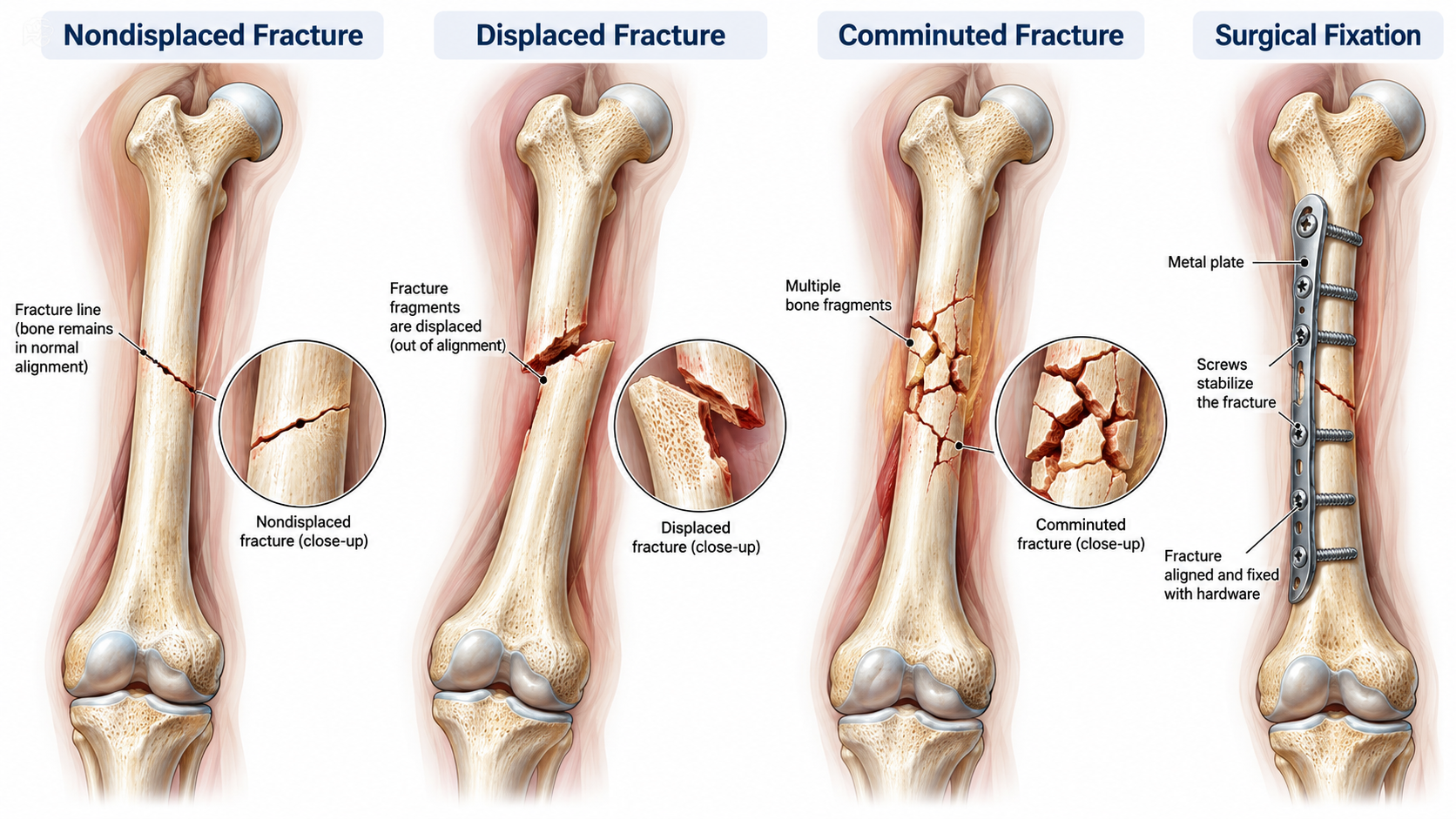
- Displaced fractures
- Nondisplaced fractures
- Comminuted fractures
- Stress fractures
- Avulsion fractures
- Intra-articular fractures involving a joint
- Open fractures in which the skin is disrupted
The treatment plan depends on the location and pattern of the fracture, the amount of displacement, joint involvement, age, activity level, and overall health.
Common Fracture Locations
We evaluate and treat fractures involving areas such as:
- Shoulder
- Clavicle
- Upper arm
- Elbow
- Forearm
- Wrist and hand
- Hip
- Thigh
- Knee
- Lower leg
- Ankle and foot
Symptoms of a Possible Fracture
A fracture should be considered after an injury when symptoms include:
- Significant pain
- Swelling
- Bruising
- Tenderness
- Difficulty moving the injured area
- Difficulty bearing weight
- Visible deformity
- Loss of normal function
- Pain that worsens with movement or pressure
Some fractures may not cause an obvious deformity, so persistent pain after an injury should still be evaluated.
How Are Fractures Diagnosed?
Evaluation typically begins with a physical examination and review of how the injury occurred.
Imaging may include:
- X-rays
- CT scans for selected complex fractures
- MRI when additional soft-tissue or stress injury evaluation is needed
Imaging helps determine the fracture pattern, alignment, joint involvement, and appropriate treatment.
Nonsurgical Fracture Treatment
Many fractures can heal successfully without surgery.
Treatment may include:
- Splinting
- Casting
- Bracing
- Activity restrictions
- Crutches or other assistive devices
- Follow-up X-rays
- Pain management
- Physical or occupational therapy
The injured bone must remain in an acceptable position while healing.
When Is Surgery Needed?
Surgery may be recommended when a fracture is unstable, significantly displaced, involves a joint, or cannot be maintained in proper alignment with nonsurgical treatment.
Surgical treatment may involve:
- Plates and screws
- Screws alone
- Pins or wires
- Intramedullary rods or nails
- Other fixation techniques based on the fracture
The goal is to restore alignment, stabilize the bone, protect joint function, and allow the fracture to heal in the best possible position.
Recovery After a Fracture
Recovery time varies depending on the bone involved, severity of the injury, treatment method, and individual healing response.
Follow-up visits and imaging may be needed to monitor healing.
Rehabilitation may focus on:
- Restoring range of motion
- Improving strength
- Reducing stiffness
- Restoring balance and stability
- Returning to work, sports, and normal activities
Returning to activity too quickly can interfere with healing, so progression should follow the recommended treatment plan.
When Should You Seek Immediate Care?
Urgent medical evaluation is recommended for injuries involving:
- An obvious deformity
- Bone visible through the skin
- Severe uncontrolled pain
- Significant bleeding
- Numbness or loss of sensation
- A pale, cool, or discolored hand or foot
- Inability to move the injured extremity after significant trauma
These symptoms may indicate a more serious injury requiring immediate treatment.
Get the Right Treatment From the Start
Proper fracture treatment is important for restoring alignment, protecting function, and helping you return safely to normal activity.
Schedule an orthopaedic evaluation if you have sustained an injury or have ongoing pain that may represent a fracture.