Knee Arthroscopy
Minimally Invasive Treatment for Knee Injuries
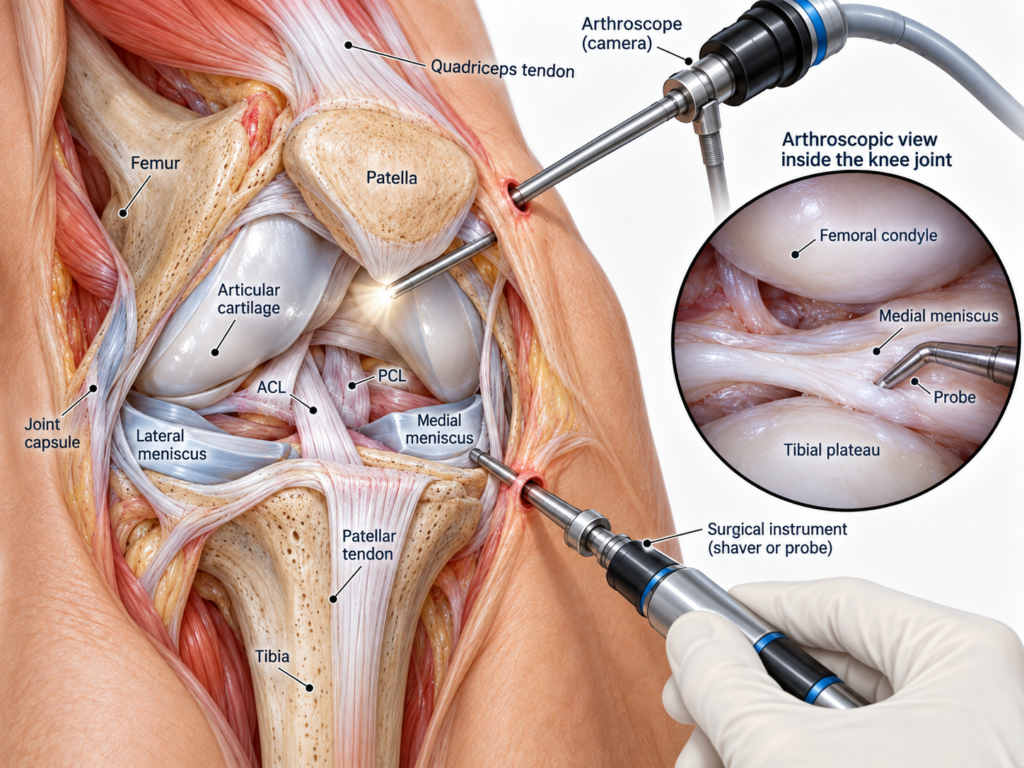
Knee arthroscopy is a minimally invasive surgical procedure used to diagnose and treat a variety of problems inside the knee joint. A small camera and specialized instruments are inserted through small incisions, allowing the surgeon to evaluate and treat damaged tissue with minimal disruption to the surrounding structures.
For appropriate patients, arthroscopy may allow for smaller incisions and a more focused recovery compared with traditional open surgery.
Conditions Commonly Treated with Knee Arthroscopy
Knee arthroscopy may be used to treat:
- Meniscus tears
- ACL injuries
- Cartilage injuries
- Loose bodies within the joint
- Inflamed or damaged joint tissue
- Certain kneecap problems
- Selected ligament or soft-tissue injuries
Not every knee condition requires surgery. Treatment depends on the type and severity of the injury, symptoms, activity level, imaging findings, and response to nonsurgical care.
Symptoms That May Require Evaluation
You may benefit from an orthopaedic evaluation if you are experiencing:
- Persistent knee pain
- Swelling
- Clicking, catching, or locking
- Difficulty bending or straightening the knee
- Instability or giving way
- Pain with walking, stairs, running, or sports
- Reduced range of motion
- Symptoms that continue despite rest or conservative treatment
Nonsurgical Treatment Options
Whenever appropriate, treatment may begin with conservative options such as:
- Activity modification
- Anti-inflammatory medications
- Physical therapy
- Injections
- Bracing
- Home exercise programs
- Temporary modification of sports or work activities
If symptoms continue despite appropriate nonsurgical care, arthroscopic treatment may be considered.
What Happens During Knee Arthroscopy?
During knee arthroscopy, a small camera called an arthroscope is inserted into the knee through a small incision.
The camera provides a detailed view of the joint on a monitor. Additional small incisions allow specialized instruments to be used to treat the specific problem.
Depending on the condition, the procedure may involve:
- Trimming or repairing a torn meniscus
- ACL reconstruction or treatment of associated injuries
- Treating damaged cartilage
- Removing loose cartilage or bone fragments
- Removing inflamed tissue
- Treating selected kneecap or joint-surface problems
The exact procedure depends on the patient's diagnosis and findings at surgery.
Recovery After Knee Arthroscopy
Recovery varies depending on the procedure performed.
Some patients may begin walking and gentle movement shortly after surgery, while others may need crutches, a brace, or temporary activity restrictions to protect a repair.
Physical therapy may focus on:
- Reducing swelling
- Restoring range of motion
- Improving strength
- Improving balance and stability
- Restoring normal walking
- Gradually returning to work, exercise, and sports
Your postoperative plan will be individualized based on the procedure performed and your recovery goals.
Is Knee Arthroscopy Right for You?
Knee arthroscopy may be considered when pain, mechanical symptoms, instability, or loss of function interfere with daily activities or sports and have not improved with appropriate nonsurgical treatment.
The decision to proceed with surgery is made after reviewing your symptoms, examination, imaging, treatment history, and personal goals.
Get Back to Moving with Confidence
Schedule an orthopaedic evaluation to determine the cause of your knee symptoms and discuss treatment options that may be appropriate for you.