Cubital Tunnel Surgery
Relief for Numbness, Tingling, and Ulnar Nerve Compression
Cubital tunnel syndrome occurs when the ulnar nerve becomes compressed or irritated as it passes along the inside of the elbow.
The ulnar nerve is the same nerve that causes the familiar “funny bone” sensation. When compressed, it can cause numbness, tingling, pain, and weakness that may travel from the elbow into the ring and small fingers.
When symptoms become persistent, progressive, or associated with weakness, cubital tunnel surgery may be considered.
Common Symptoms of Cubital Tunnel Syndrome
Symptoms may include:
- Numbness or tingling in the ring and small fingers
- Tingling that worsens when the elbow is bent
- Aching or discomfort along the inside of the elbow
- Hand weakness
- Reduced grip strength
- Difficulty with fine motor tasks
- Dropping objects
- Symptoms that wake you at night
- Muscle weakness or wasting in more advanced cases
Symptoms may become more noticeable during activities that require prolonged elbow bending or pressure on the inside of the elbow.
What Causes Cubital Tunnel Syndrome?
Cubital tunnel syndrome develops when the ulnar nerve is compressed, irritated, stretched, or unstable around the elbow.
Contributing factors may include:
- Prolonged elbow bending
- Repeated pressure on the inside of the elbow
- Repetitive arm or elbow activity
- Previous elbow injury
- Arthritis or bone spurs
- Swelling around the nerve
- Anatomic narrowing of the cubital tunnel
- Ulnar nerve instability or movement over the medial epicondyle
In some patients, more than one factor contributes to nerve irritation.
How Is Cubital Tunnel Syndrome Diagnosed?
Evaluation typically includes a review of symptoms and a physical examination of the elbow, forearm, hand, and ulnar nerve.
Your physician may evaluate:
- Sensation in the ring and small fingers
- Grip strength
- Hand and finger strength
- Ulnar nerve tenderness
- Symptoms with prolonged elbow bending
- Whether the ulnar nerve moves or shifts with elbow motion
- Signs of muscle weakness or atrophy
In some cases, nerve conduction studies or EMG testing may be used to evaluate the severity and location of nerve compression.
Nonsurgical Treatment Options
Mild or early symptoms may improve with conservative treatment.
Options may include:
- Activity modification
- Avoiding prolonged elbow bending
- Avoiding direct pressure on the elbow
- Nighttime elbow positioning or splinting
- Anti-inflammatory medications
- Physical or occupational therapy
- Nerve-gliding exercises when appropriate
The goal is to reduce irritation and pressure on the ulnar nerve.
When Is Surgery Considered?
Cubital tunnel surgery may be recommended when:
- Symptoms persist despite nonsurgical treatment
- Numbness becomes constant
- Hand weakness develops
- Grip strength declines
- Nerve testing shows significant compression
- Muscle changes or wasting are present
- Symptoms interfere with sleep, work, or daily activities
More severe or long-standing nerve compression may take longer to recover, and some nerve changes may not completely reverse.
What Is Cubital Tunnel Surgery?
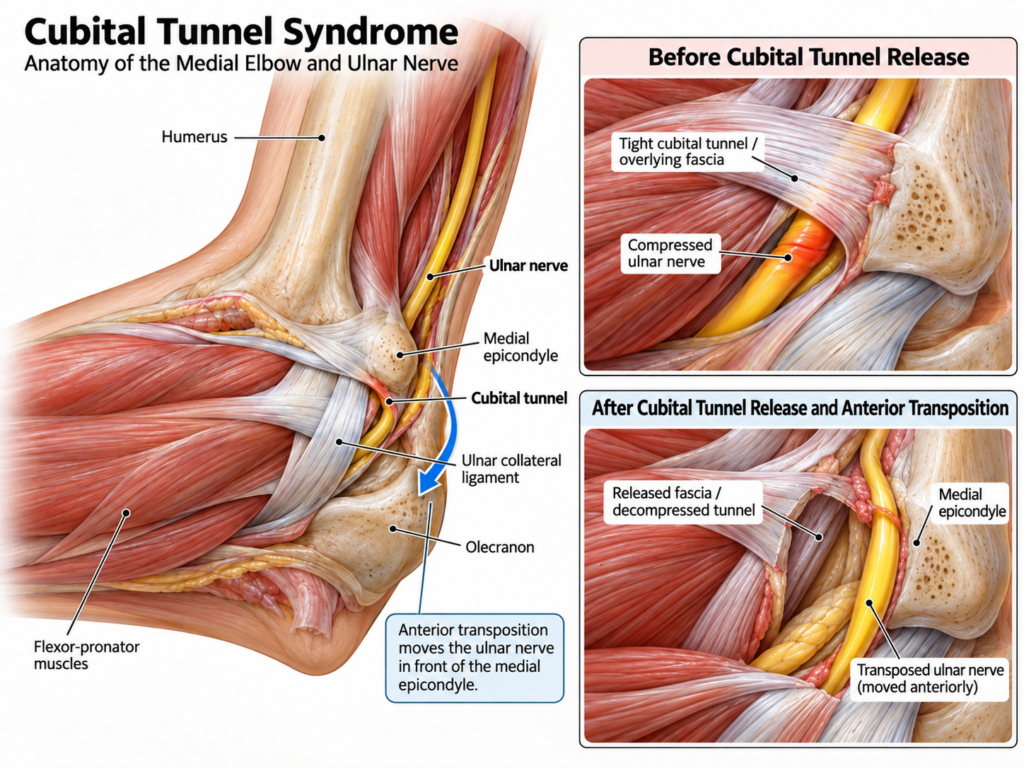
Cubital tunnel surgery is performed to reduce pressure on the ulnar nerve around the elbow.
Depending on the patient's anatomy and the condition of the nerve, surgery may involve:
Ulnar Nerve Decompression
The tissue causing pressure on the ulnar nerve is released, creating more space for the nerve while leaving it in its normal position.
Ulnar Nerve Transposition
In some patients, the ulnar nerve may be moved from behind the medial epicondyle to a new position in front of the elbow.
Transposition may be considered when the nerve is unstable, repeatedly moves over the bone, or when additional protection of the nerve is needed.
The appropriate procedure is determined based on the patient's symptoms, examination, anatomy, and nerve findings.
Recovery After Cubital Tunnel Surgery
Recovery varies depending on the procedure performed and the severity of nerve compression before surgery.
After surgery, patients may experience temporary soreness, swelling, or sensitivity around the incision.
Recovery may include:
- Gentle elbow and hand motion
- Temporary activity restrictions
- Gradual return of strength
- Hand or occupational therapy when appropriate
- Avoiding pressure on the healing elbow
- Gradual return to work and normal activities
Numbness and tingling may improve gradually. Recovery from severe or long-standing nerve compression may take more time.
Is Cubital Tunnel Surgery Right for You?
Surgery may be considered when symptoms are persistent, progressive, or associated with weakness and have not improved with appropriate conservative treatment.
The decision to proceed with surgery is based on your symptoms, examination findings, nerve testing when needed, treatment history, and overall function.
Don't Ignore Persistent Ring and Small Finger Numbness
Early evaluation can help determine the severity of ulnar nerve compression and identify the treatment options most appropriate for you.